
Blog Reto Lang – the role of stress granules in viral infections

Viral infections as stressors: unlocking cellular stress response during viral infections
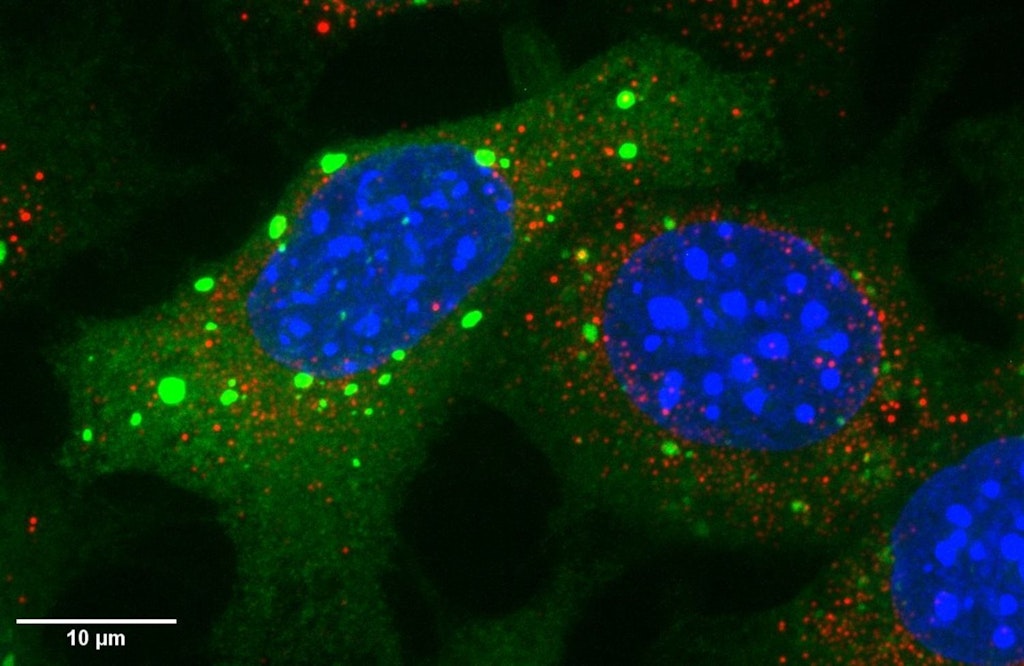
The cells of living organisms experience various stressors, such as nutrient deficiencies, contact with toxins, and viral infections. In order to prevent damage to the cell and to adapt to stress, cells have developed a stress response. One characteristic of this response is the formation of what are known as stress granules (SGs), which are assemblies of different proteins and mRNA in the cell. The function of these stress granules is still not completely understood. Scientists assume, however, that they regulate a wide range of cellular processes, such as the production of proteins and the suppression of programmed cell death, thereby helping the cell cope with stress.
In connection with infections it was found that some viruses manipulate or completely suppress the formation of stress granules in the cell. This resulted in stress granules also being attributed a role in immune response, although this is still disputed.
Interview with Dr Reto Lang
Glossary
Link to the publication
Authors
Reto M. Lang, Silvio Steiner, Jenna Kelly, Anne-Christine Uldry, Pratik Dave, Sophie Braga-Lagache, Jeffrey Chao, Manfred Heller, Volker Thiel