
Blog Katja Moser – The bovine viral diarrhoea BVD
Eradication of BVD in Switzerland: from basic research to the successful development of diagnostic testing
The bovine viral diarrhoea virus (BVDV) is a pestivirus that affects bovines. It has been part of the Swiss eradication programme since 2008. Bovine viral diarrhoea (BVD) in cattle is now almost eradicated. However, the closely related border disease virus (BDV) remains a challenge. This is particularly common in sheep, but can also affect bovines and be mistakenly identified as BVDV.
Pestiviruses, such as BVDV and BDV, can cause significant economic losses. Because both are animal diseases, affected farms are put under quarantine. However, the length of the quarantine is not the same for BVDV and BDV. Differentiation of BVDV and BDV antibodies is important to identify the source of infection and thus to support the BVD eradication programme, and also to determine how long a farm needs to be placed under quarantine.
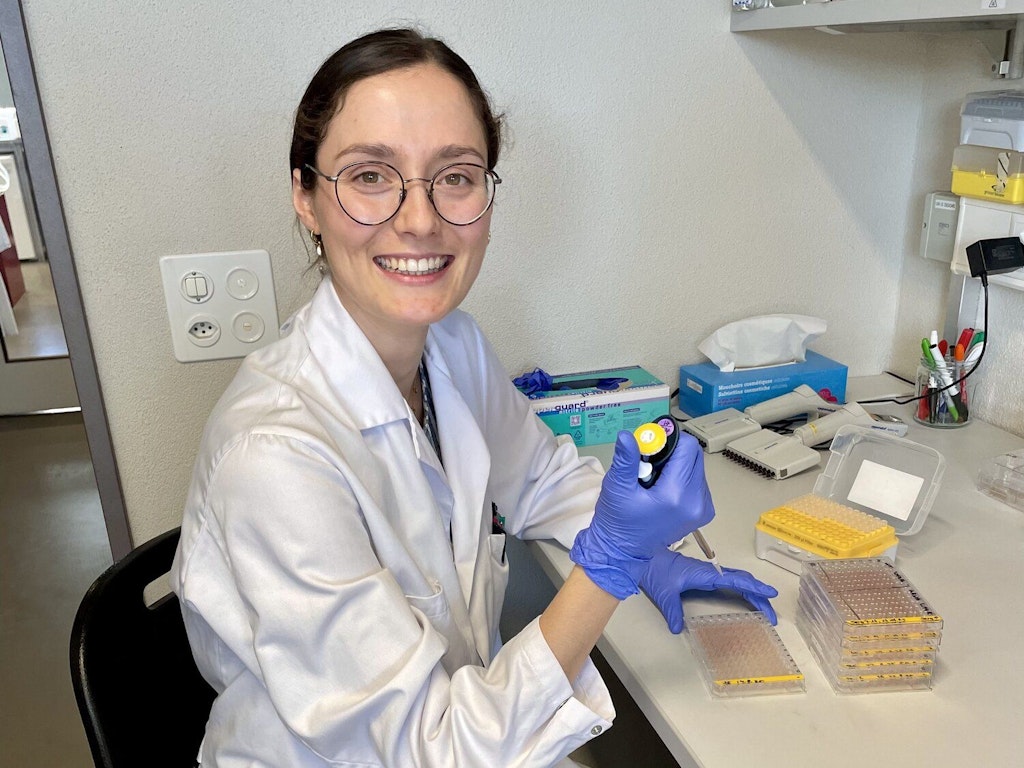
It is currently only possible to differentiate these two antibodies using the time-consuming and resource-intensive cross-serum neutralisation test (cross-SNT).
Interview with veterinarian Dr Katja Moser
Information about BVD