

Research methods also vary
Interview with Nicole Jegerlehner, ASMV
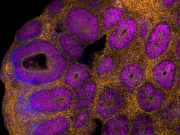
Marco Alves, organoids are similar to organs but are smaller and less complex. Why are they nonetheless important for research?
Compared to research with traditional cell cultures, organoids are far closer to in vivo studies, i.e. studies in the entire organism.
What is the most difficult part of producing organoids?
It takes a lot of knowledge and a great deal of experience that can only be acquired by working on organoids in the lab. We started working with organoids in 2017, but we were only really experienced with them four years later. The research and analysis methods also vary, because while traditional cell cultures are two dimensional, organoids are three dimensional.
What is the key to working with organoids?
Knowledge of stem cells: we have to prevent them from differentiating and later stimulate them to develop into a specific organ. It's a bit like conducting an orchestra.
What contribution do organoids make to veterinary medicine?
Organoids from animals are not as far developed as those in human medicine at the moment. But there is similar potential. The stomach and intestines are the best researched in veterinary medicine to date, also because these organoids are the easiest to produce. We want to do even more research in this area soon.
Will it be possible to artificially produce real organs one day?
We're still a long way from being able to do that. There are still a lot of very complex problems to solve first. Our current aim is to research organoids and understand the interactions between cells.